Got a structure you need gone? I get a lot of calls from folks right here in Temple Terrace, and usually, they've got the same few questions bouncing around in their heads. It's a big job, structural demolition, and you want to make sure you're doing it right. So, let's tackle some of the most common things I hear.
Do I even need a permit for demolition in Temple Terrace?
Absolutely, you do. This isn't like tearing down a shed in your backyard (though even that might need a permit depending on size). For any structural demolition – a house, a commercial building, even a significant addition – the City of Temple Terrace requires a demolition permit. You'll need to submit an application, often with site plans, proof of utility disconnections, and sometimes even an asbestos survey. Don't even think about starting without it. The fines for unpermitted work are no joke, and it can really mess up future plans for your property.
How long does a typical house demolition take?
This is a tough one to give a single answer for because it depends on a few things. A small, single-story ranch house, once all the permits are in place and utilities are disconnected, might only take us a few days to physically demolish and clear the site. A larger, two-story home with a concrete slab or basement, or one with more complex debris to sort, could take a week or even two. Then there's the time for hauling away all the material. We're pretty efficient at Allied Demolition Company, but we don't rush. Safety and thoroughness are always the priority. The biggest delays usually come from waiting on permit approvals or utility companies to disconnect services, not the actual demolition itself.
What about asbestos and other hazardous materials?
This is a critical point, especially with older homes. Many houses built before the 1980s, and even some newer ones, can contain asbestos in things like roofing, floor tiles, insulation, and siding. Lead paint is another common issue. Before any demolition can happen, you'll need an inspection and often a survey for these materials. If they're found, they have to be removed by a licensed abatement contractor before we can even touch the structure. It's a separate process, and it adds to the overall cost and timeline, but it's non-negotiable for safety and legal reasons. We can't just knock down a house full of asbestos; it's dangerous for everyone involved and terrible for the environment.
What happens to all the debris?
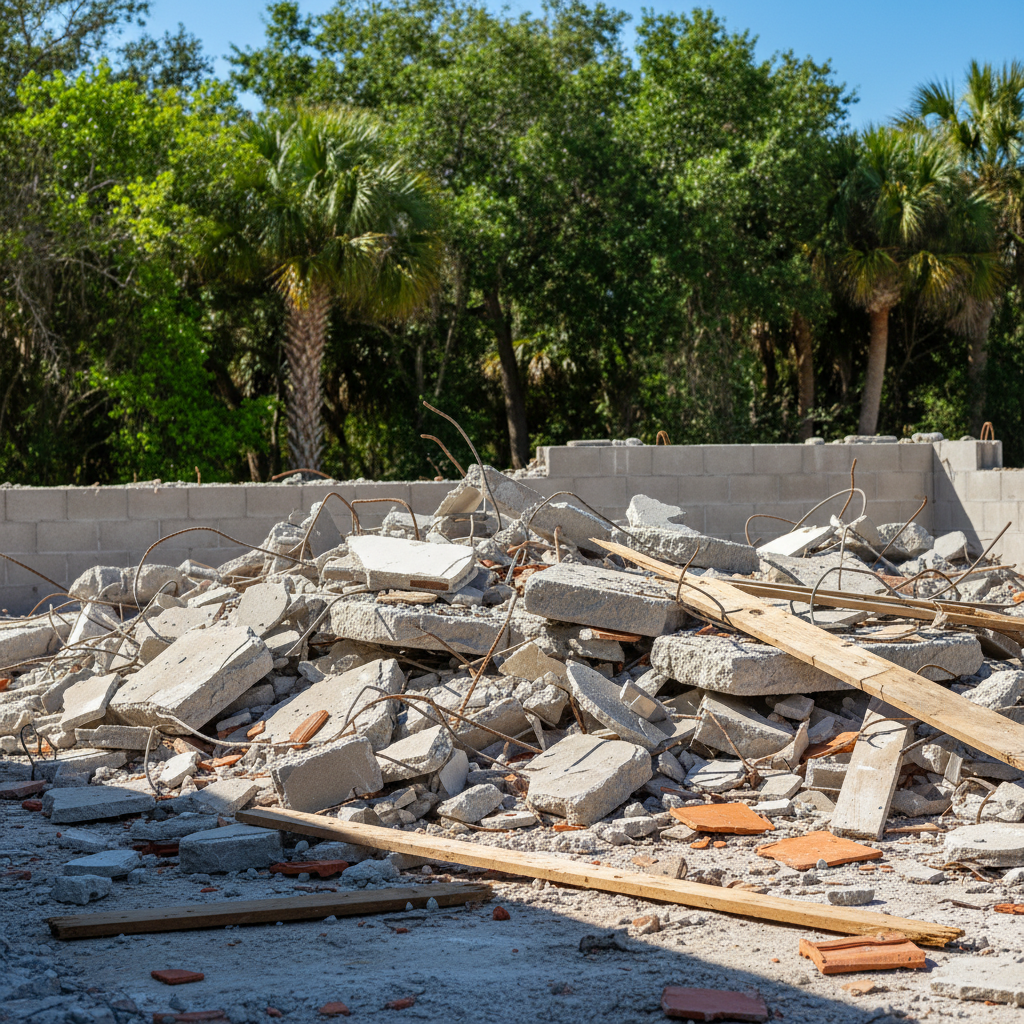
We don't just haul everything to the dump. We're big believers in recycling and responsible disposal. Concrete, asphalt, wood, metals – a lot of these materials can be sorted out and sent to recycling facilities. Things like clean fill dirt can often be reused. Hazardous materials, once abated, go to specialized landfills. We work hard to minimize what ends up in a traditional landfill. It's better for the planet, and frankly, it's often more cost-effective too, as recycling fees can sometimes be less than landfill tipping fees. We'll give you a breakdown of our disposal plan when we quote your job.
Will my yard or neighboring properties be affected?
We take every precaution to protect your property and your neighbors'. Before we start, we'll put up fencing and barriers to contain the work zone. We use dust suppression techniques, like watering down the site, to keep airborne particles to a minimum. Sometimes, especially with older homes and our sandy Temple Terrace soil, there can be some minor ground disturbance, but we aim to keep it contained to the immediate demolition footprint. We're insured, of course, but our goal is to never have to use that insurance. We communicate with neighbors if there are any specific concerns, like temporary noise or traffic impacts.
Can I save any materials from the house before demolition?
Sometimes, yes! This is called deconstruction, and it's a great way to salvage valuable materials and reduce waste. If you're looking to save things like antique doors, windows, fixtures, or even specific lumber, we can discuss that as part of the project scope. It does add time and labor to the process because it's more careful, manual work than just knocking everything down. But if you have specific items you want to reclaim, or if you're interested in donating usable materials to places like Habitat for Humanity ReStores, let us know upfront. We can factor that into our plan and pricing.
Look, structural demolition isn't something you do every day. It's a complex process with a lot of moving parts. My advice? Don't hesitate to ask every single question you have. That's what we're here for at Allied Demolition Company. We want you to feel confident and informed every step of the way.