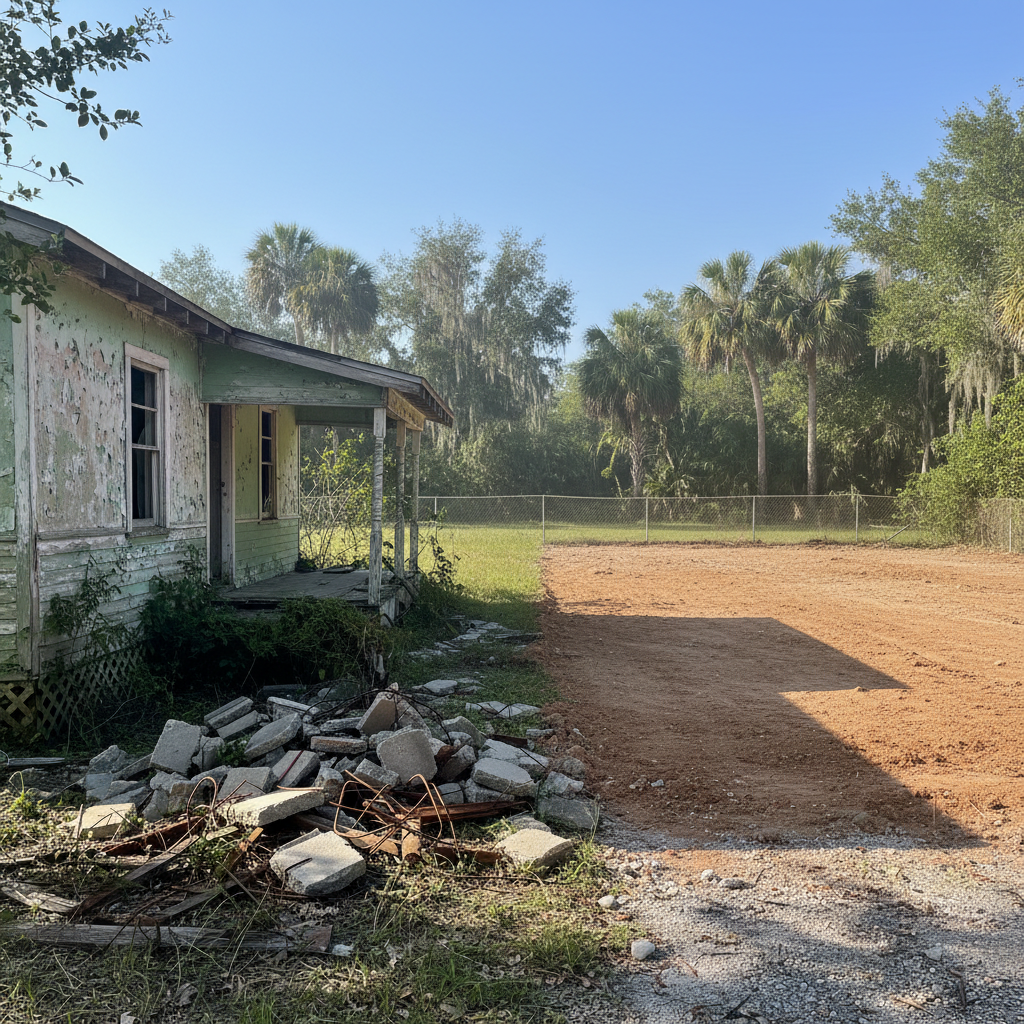
So, you've got a building in Temple Terrace that needs to come down. Maybe it's an old structure that's seen better days, or you're clearing the lot for new construction. Whatever the reason, you're facing a big decision: how do you actually demolish it? For a full building tear-down, you're generally looking at two main approaches: deconstruction or mechanical demolition. I've done plenty of both, and each has its pros and cons, especially here in Florida.
What's Mechanical Demolition?
This is probably what most people picture when they hear “demolition.” It's the classic wrecking ball or, more commonly these days, heavy machinery like excavators with hydraulic attachments – shears, hammers, grapples. We bring in the big iron, and we systematically take the building apart, or rather, knock it down. It's fast, it's efficient, and it gets the job done.
Pros of Mechanical Demolition:
- Speed: This is the big one. Mechanical demolition is significantly quicker than deconstruction. If you're on a tight timeline to get your lot cleared and ready for the next phase, this is usually the way to go.
- Cost-Effective: Generally, mechanical demolition is less expensive upfront. Fewer labor hours are involved compared to the meticulous process of deconstruction. For many homeowners, especially those on a budget, this is a major factor.
- Less Site Time: Because it's faster, our crew spends less time on your property, which means less disruption for you and your neighbors.
Cons of Mechanical Demolition:
- Waste: This is the main drawback. While we do our best to separate materials for recycling (concrete, metal), a lot of debris ends up in the landfill. Everything gets mixed up, making it harder to salvage.
- Dust and Noise: There's no getting around it; heavy machinery makes noise and kicks up dust. We take precautions, but it's a reality.
What's Deconstruction?
Deconstruction is essentially the opposite of construction. Instead of tearing a building down, we're carefully taking it apart, piece by piece, with the goal of salvaging as many materials as possible for reuse or recycling. Think of it as an un-build. It's a much more labor-intensive process, often done by hand or with smaller equipment.
Pros of Deconstruction:
- Environmental Impact: This is where deconstruction shines. You're diverting a massive amount of material from landfills. Lumber, fixtures, windows, doors, even appliances – they can all find a second life. This is a big deal for sustainability.
- Potential for Material Resale/Donation: Some of the salvaged materials might have value. You could sell them, or donate them to organizations like Habitat for Humanity ReStore. Sometimes, those donations can even offer a tax deduction, so check with your accountant.
- Reduced Waste Disposal Costs: Because less material goes to the landfill, you'll have lower tipping fees.
Cons of Deconstruction:
- Time: Deconstruction takes a lot longer. It's a meticulous process, and you can't rush it if you want to salvage materials properly.
- Cost: Due to the increased labor and time involved, deconstruction is almost always more expensive upfront than mechanical demolition. The potential resale or tax benefits might offset some of this, but it's rarely a wash.
- Labor Intensive: It requires a skilled crew to carefully dismantle components without damaging them.
- Material Condition Dependent: The value and reusability of salvaged materials depend heavily on their condition. If the building's really old or suffered significant damage from, say, a hurricane or just years of our humid Temple Terrace weather, there might not be much worth saving.
Which One Should You Choose for Your Temple Terrace Property?
Alright, so you've got the rundown. For most homeowners in Temple Terrace, especially if you're looking to clear a lot efficiently and cost-effectively, mechanical demolition is usually the more practical choice.
Here's why: Our typical Florida homes, especially those built in the 60s and 70s around areas like the Temple Terrace Golf & Country Club, often aren't built with high-value architectural salvage in mind. They're usually concrete block construction, and while we can recycle the block, the internal finishes and lumber might not be in prime condition after decades of humidity and potential pest issues. The labor cost for carefully deconstructing a building that might only yield moderate-value salvage often outweighs the benefits.
That said, if you have a unique historical property, or you're deeply committed to sustainability and your budget allows for the extra time and expense, deconstruction is a fantastic option. We at Allied Demolition Company can certainly handle either approach, and we're always happy to discuss your specific project and give you an honest assessment of what makes the most sense for your situation.
Ultimately, it comes down to your priorities: speed and budget, or environmental impact and potential salvage. Give us a call, and we can walk through your options right there on your property.