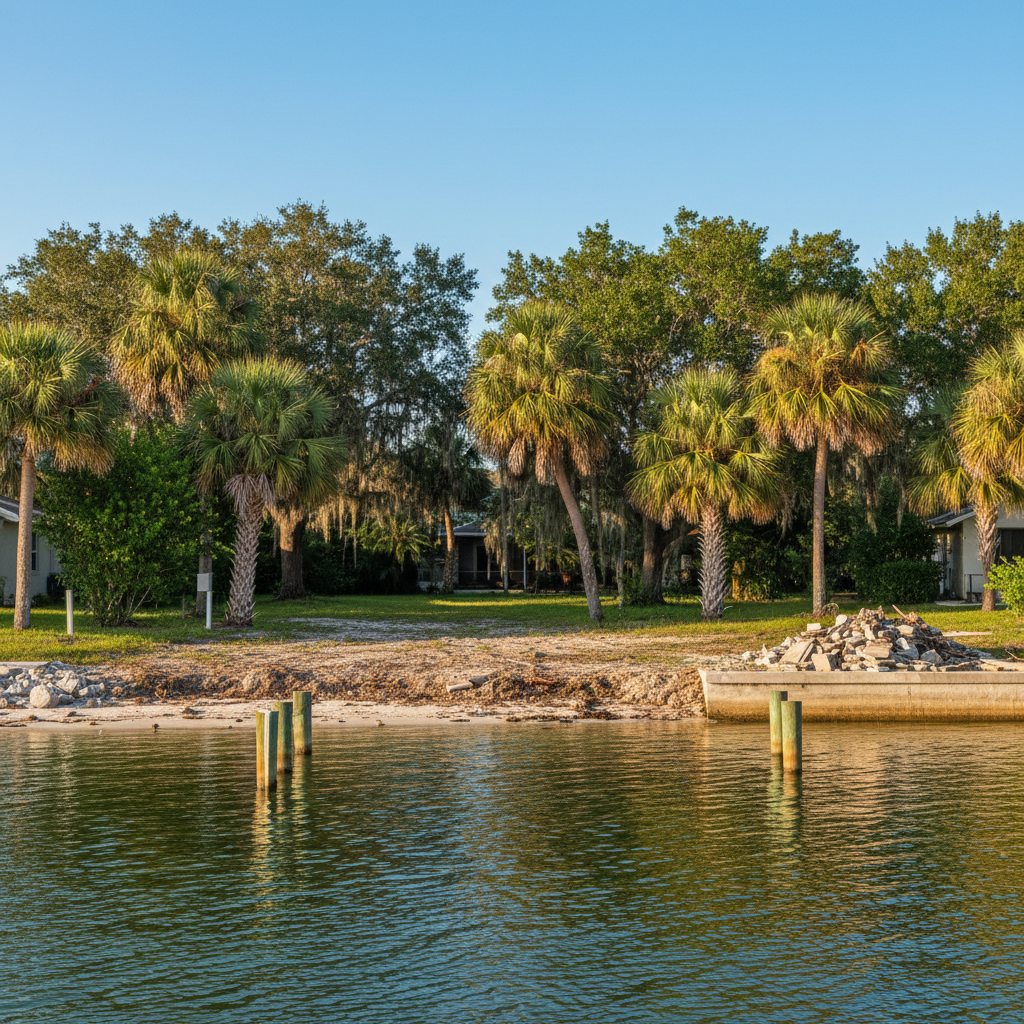
Got an old dock that's seen better days? Maybe it's falling apart, or you're just ready for something new. Whatever the reason, if you're thinking about tearing down a dock here in Temple Terrace, you're probably wondering what kind of dent it's going to put in your wallet. I've been in this business a long time, and honestly, it's not always as simple as it looks. So, let's talk about what really affects the price and what you should expect.
What Drives Dock Demolition Costs?
A few big things really make the cost go up or down. It's not just about how big the dock is, though that's a huge part of it, of course.
- Dock Size and Type: This is probably the biggest factor, hands down. A small, simple wooden dock, maybe 10x10 feet, is a lot easier and quicker to remove than some massive, multi-slip concrete monster. Concrete, especially if it's reinforced, needs specialized equipment and takes more time. Wood, composite, or aluminum docks are generally less expensive to take apart.
- Location and Access: Can we get our equipment right up to the dock? Is it on a canal, a lake, or a river? If it's a tight spot, or if we have to barge equipment in, that's definitely going to add to the cost. Think about those narrow canals off the Hillsborough River – sometimes just getting heavy machinery in there is a real head-scratcher.
- Water Depth and Conditions: Deeper water can make things trickier, sometimes needing divers or special underwater gear. Strong currents or tides can also slow things way down, making the job more complex and, you guessed it, more expensive.
- Materials and Condition: Is the dock just wood planks and pilings, or does it have a boat lift, a roof, or even a small boathouse attached? The more pieces there are, and the tougher they are, the more work it is. If the dock is already half-collapsed and submerged, that brings its own set of challenges and safety worries.
- Permitting: You can't just start ripping things out willy-nilly. You'll need permits from the city, maybe the county, and often the Department of Environmental Protection (DEP) or the Army Corps of Engineers, especially when you're working in navigable waters. These permits have fees, and the whole process takes time. A good contractor will help you through this, but the permit fees themselves are separate.
- Debris Disposal: All that wood, concrete, and metal has to go somewhere, right? Hauling it away and properly getting rid of it at an approved facility is a significant cost. We're talking about tons of material sometimes.
Typical Cost Ranges for Dock Demolition in Temple Terrace
Alright, let's talk numbers. I hate to say