Do I really need a permit for demolition in Temple Terrace?
Absolutely, you do. This isn't a suggestion; it's the law. Look, I get it, permits can feel like a headache, just another hoop to jump through. But for demolition, it's crucial. The City of Temple Terrace Building Department needs to know what's coming down and how you plan to do it. They're looking out for safety, for the environment, and for your neighbors. Without a permit, you're not just risking fines; you're risking stop-work orders, and you could be held liable for any issues that pop up. A good contractor, like us at Allied Demolition Company, will handle all the permit applications for you. We know the drill, we've got the relationships with the city, and we make sure everything's above board before the first piece of equipment even shows up on your property.
How long does a typical house demolition take from start to finish?
That's a question I hear a lot, and the answer isn't always a simple number. It depends on a few things: the size of the structure, what it's made of, and if there are any tricky situations like asbestos or lead paint. For a standard single-family home here in Temple Terrace, once the permits are in hand and utilities are disconnected, the actual physical demolition might only take a day or two. But that's just the 'wrecking ball' part. Before that, you've got the permitting process, which can take a few weeks. Then there's the utility disconnections – power, water, sewer, gas – which can sometimes drag on depending on the utility companies. After the structure is down, you've got the debris removal and site grading, which might take another few days to a week. So, from the moment you decide to demolish to when you have a clean, level lot, you're usually looking at anywhere from 4 to 8 weeks, sometimes more if there are environmental concerns or utility delays. We always give you a realistic timeline upfront.
What about asbestos and lead paint? Is that my problem or yours?
That's a big one, and it's definitely something we have to address before any demolition starts, especially with older homes common in areas like the Riverhills neighborhood. Asbestos and lead paint are hazardous materials, and they can't just be torn down and thrown in a regular dumpster. They require special handling, abatement, and disposal according to strict federal and state regulations. As your contractor, it's our responsibility to identify these materials. We'll arrange for proper testing by certified professionals. If they're present, we'll coordinate with licensed abatement specialists to safely remove them before demolition begins. This isn't something you want to cut corners on. It's for the safety of our crew, your property, and the environment. The cost for abatement is usually separate from the demolition itself, and it's something we'll discuss clearly with you once we have the test results.
Will my utilities (water, power, sewer, gas) automatically be disconnected?
No, they won't, and this is a critical step that often gets overlooked by homeowners. You can't just start tearing down a house with live power lines or gas pipes. That's incredibly dangerous. Before demolition, all utilities to the structure must be officially disconnected and capped off by the respective utility companies. This means calling TECO for electricity and gas, and the City of Temple Terrace for water and sewer. It's usually the homeowner's responsibility to initiate these requests, though we can guide you through the process and make sure you've got all the right contacts. Make sure you get documentation from each utility company confirming the disconnection. We won't start work until we have proof that it's safe to proceed.
What happens to all the debris? Is it just hauled to a landfill?
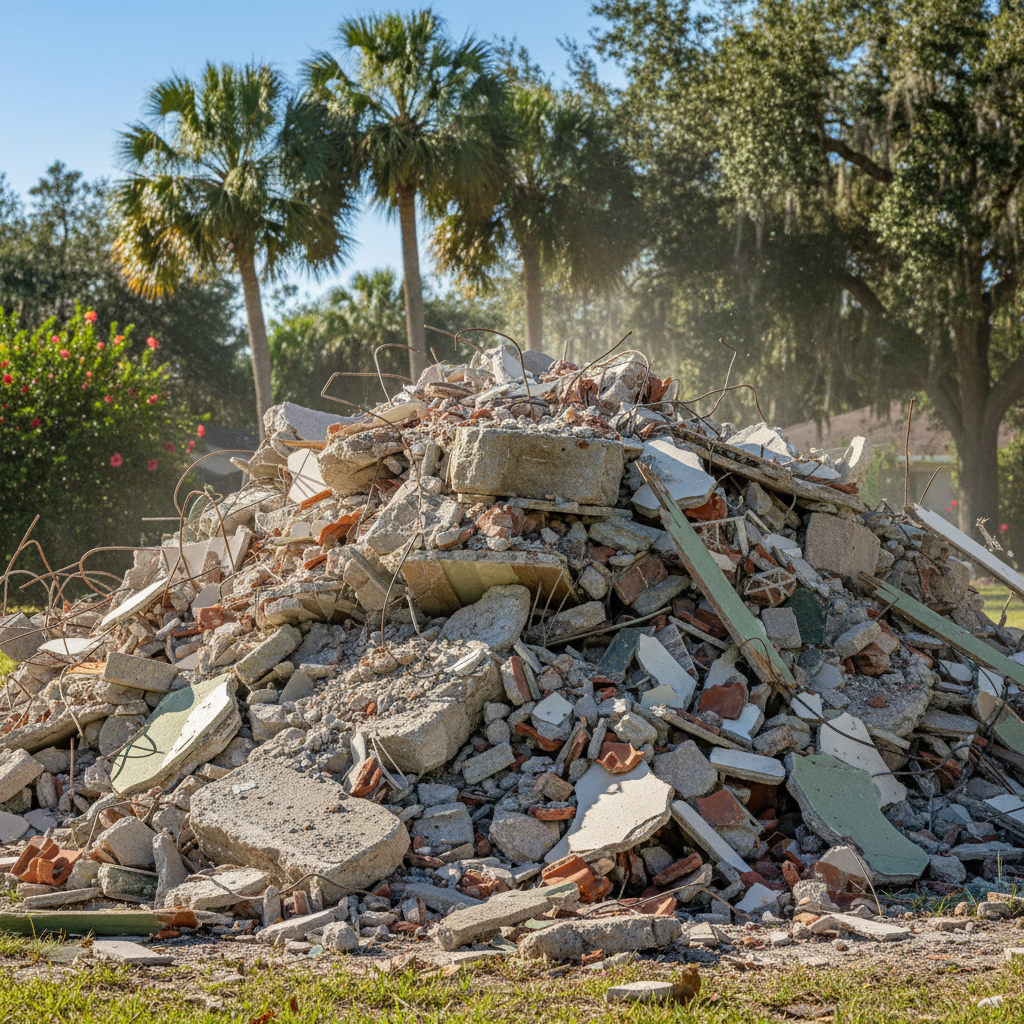
While some debris inevitably ends up in a landfill, responsible demolition contractors, like Allied Demolition Company, prioritize recycling and salvaging as much as possible. We're not just about tearing things down; we're about doing it smart. Concrete, asphalt, metals, and even some wood can often be recycled. We'll separate these materials on-site or at a transfer station and send them to appropriate recycling facilities. Sometimes, if a home has salvageable items like old fixtures, doors, or good lumber, we might even work with architectural salvage companies. It reduces waste, it's better for the environment, and sometimes it can even help offset disposal costs. We'll discuss our debris management plan with you during the planning stages.
What should I expect the site to look like after demolition?
Once the structure is down, and all the debris is hauled away, you'll be left with a clear, level lot. Our standard service includes basic site grading, which means we'll smooth out the ground where the house once stood. We'll make sure there are no big holes or piles of dirt. It won't be perfectly landscaped, but it will be a clean slate, ready for whatever you have planned next, whether that's new construction, a garden, or just an open space. We always do a final walk-through with you to ensure you're satisfied with the condition of the site. If you need more extensive grading or specific landscaping prep, that's something we can discuss as an additional service.
Does Temple Terrace have specific rules about noise or working hours for demolition?
Yes, they do, just like most cities. Temple Terrace has ordinances regarding construction and demolition noise. Generally, heavy machinery and noisy work are restricted to certain hours, typically weekdays during business hours, say from 7 AM to 6 PM, and sometimes shorter hours on Saturdays, with no work on Sundays or holidays. We're very mindful of our neighbors and always adhere to these local regulations. We'll make sure our crew understands and respects the working hours to minimize disruption to your community. We'll also make sure to put up any required signage and take measures to control dust and runoff, especially important during our rainy season when soil can easily wash away.